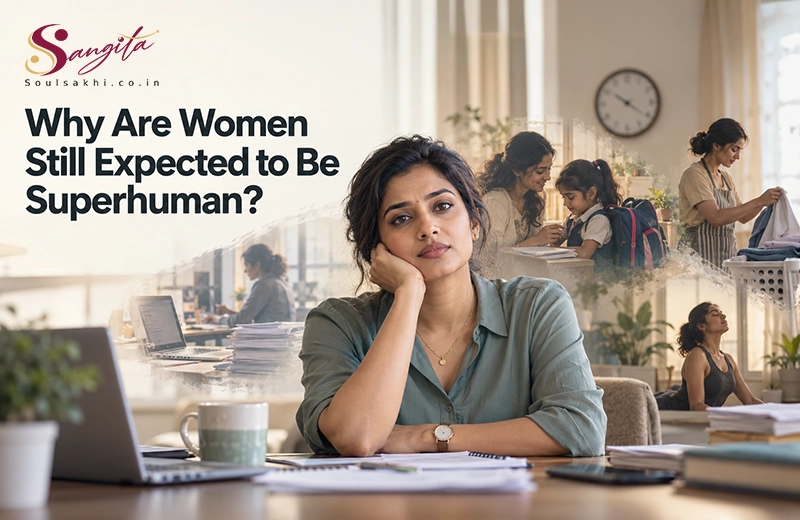
You wake up before the alarm. You pack the tiffin, answer three work messages, remember the parent teacher meeting, and call your mother on the way to the office. By evening, you smile at everyone and feel like a phone at two percent battery. Sound familiar?
Society still expects women to excel as professionals, partners, mothers, daughters, and caregivers while staying calm, kind, and cheerful through it all. Nobody calls this a job, yet it runs around the clock. The pressure to “handle everything” creates invisible exhaustion and makes asking for help feel like failure. Ignore it long enough, and burnout, resentment, and health problems follow.
This guide explains why the superwoman myth survives in 2026, what it costs, and how to redefine strength as knowing when to pause, prioritize, and seek support. You will also see how a personal growth coach for women helps you build sustainable confidence without sacrificing your own needs. Read on. Your cape can wait.
How Did the Superwoman Myth Take Hold?
Women entered offices, boardrooms, and startups in large numbers. Home life, however, did not shift to match. Old gender roles stayed in the house while new ones arrived at work, so women now carry a double burden.
India’s Time Use Survey 2024, conducted by the National Statistics Office under MoSPI, makes this visible. It recorded how persons aged six and above spent a 24-hour day. On the day recorded, 81.5% of females did unpaid domestic work for their households, against 27.1% of males. Among those who did this work, women spent 289 minutes on average and men spent 88 minutes.
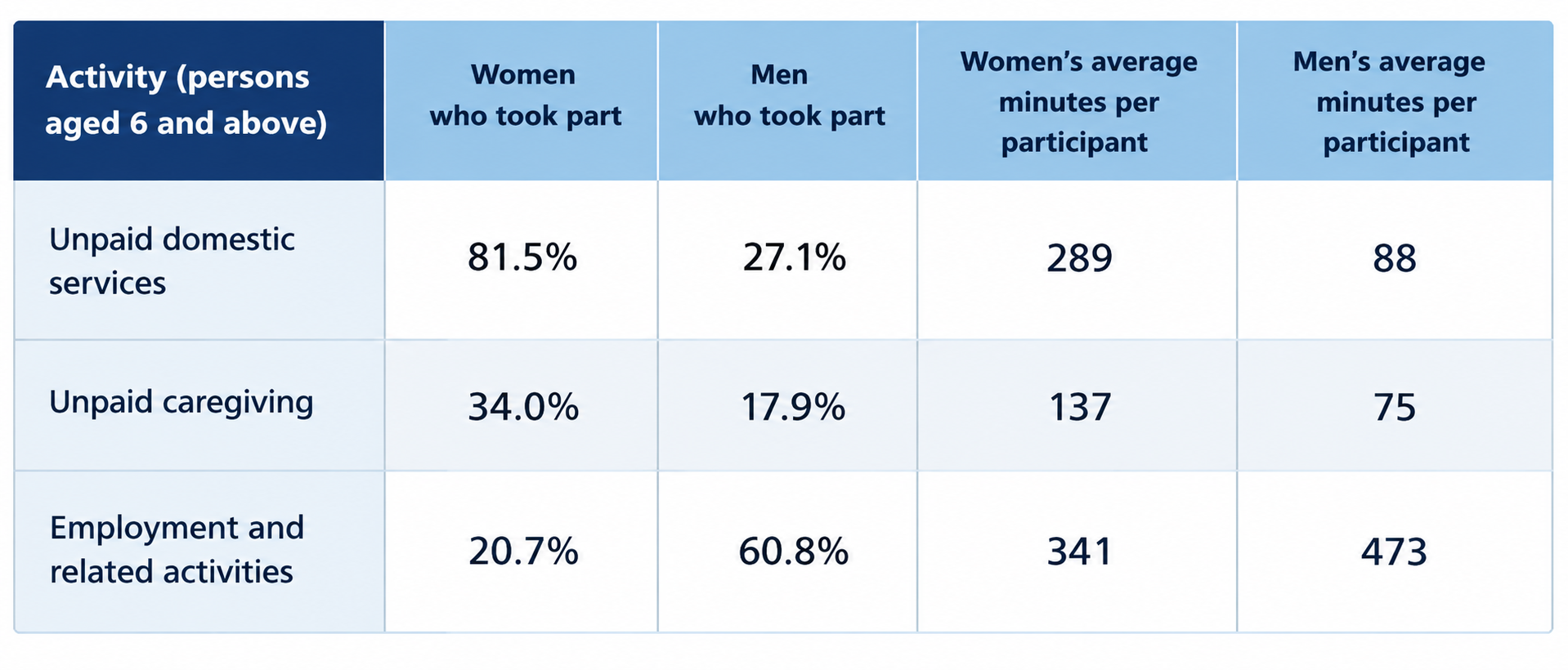
The table separates two ideas. Participation shows how many people did the activity. Minutes show the average time among those who did it, so they do not show the total daily workload. Averaged across all persons aged six and above, unpaid activities took 305 minutes a day for women and 56 minutes for men. Among participants in culture, leisure, mass media, and sports activities, women spent 164 minutes and men spent 177 minutes.
Paid work tells a related story. The Periodic Labour Force Survey for July 2023 to June 2024 put the labour force participation rate of women aged 15 and above at 41.7%, using the usual status measure. A separate March 2024 policy brief on India’s care economy estimated the value of women’s unpaid domestic and care work. Its authors multiplied 2019’s time use hours with 2019 to 2020 wage rates, which gave a notional value of about 15% to 17% of GDP depending on the wage rate used.
This highlights a bitter fact that society leans on that free labour, praises it loudly at festivals, and then forgets to count it.
So, why are women still expected to be superhuman?
Because the whole system quietly depends on it.
What Does Invisible Exhaustion Look Like?
Invisible exhaustion does not show on a calendar. It hides in the mental load, the endless background task of remembering, planning, and worrying for everyone. Nobody sees you track the milk, the medicines, the school forms, and your sister’s birthday. Yet your mind never truly switches off.
The numbers confirm the cost, though no single study tells the whole story. The 2025 Women in the Workplace report by McKinsey and LeanIn.Org drew on 124 companies in the United States and Canada and about 10,000 employees surveyed in July and August 2025. Approximately six out of ten women in senior-level positions reported frequently experiencing burnout, compared with five out of ten men in similar roles. The report describes this as higher than ever for senior women. Participation was voluntary, so the findings describe participating companies, not every workplace.
Gallup’s Q4 2025 survey of employed US adults, published in March 2026, found that 33% of women with children said they very often or always felt burned out, against 25% of men with children. It also found that women in leadership roles averaged 29% burnout from 2022 to 2025, against 19% for men. Both sets of findings come from the US.
For India, a March 2026 thematic review of existing studies (Medda and Ali, International Journal of Indian Psychology) links long hours, limited organizational support, and caregiving expectations with emotional burnout and chronic stress. It also notes that many economically independent women described feeling emotionally overburdened and undervalued.
Because it reviews other studies and is not a national survey, it shows patterns, not proof of cause.
Watch for these signs of caregiver stress in your own life.
• Constant tiredness that sleep does not fix
• Irritability over small things
• Guilt whenever you rest
• Feeling invisible at home and at work
• Forgetting your own needs, plans, and hobbies
Why Does Asking for Help Feel Like Failure?
Help feels like failure because women learn early that coping silently earns praise. The “strong woman” gets applause. The tired woman gets advice. So many women treat asking for help as proof that they are not good enough.
Three beliefs keep the cycle alive. First, “If I delegate, it will not be done right.” Second, “A good mother, wife, or daughter never complains.” Third, “Everyone else has it together.” These are limiting beliefs, not facts. They feed people pleasing, which feels kind but slowly drains your emotional wellbeing. Also, a woman who never asks teaches everyone around her that she needs nothing. Then nobody offers.
Is it normal to feel guilty for resting? Yes, and it is very common. Guilt shows how deeply the superwoman script has settled in. Guilt is an emotion, not a command you must follow. You can feel it and rest anyway. A mindset shift begins when you treat help as a resource, the way you treat a washing machine. Nobody feels ashamed of owning one.
How Can Women Redefine Strength?
Strength does not mean carrying everything until your back gives out. Real strength is wiser and kinder. It includes pausing, choosing, and asking, and each skill can be learned. Here is how.
Knowing When to Pause
A pause is not a collapse. Athletes rest between sets and phones need charging, so why should women run on fumes? Build small pauses into the day, like ten quiet minutes after lunch or a walk before dinner. These breaks improve your emotional wellbeing and give self-care a fixed slot instead of an apology. Start with the pause you can protect, even if it lasts five minutes.
Learning to Prioritize
You cannot excel at everything simultaneously, and neither can anyone else. Sort your week into three groups. Must do tasks protect your health, income, and family basics. Nice to do tasks add value but can slip. Let go tasks belong to someone else or to nobody. Better time management begins with the courage to drop things. Practicing healthy boundaries makes that list stick, because a polite no protects your yes.
Seeking Support Without Shame
Support comes in many forms. It can be a partner who shares chores, a friend who listens, a neighbour who covers school pickup, or a life coach who helps you think clearly. Name your need in plain words, such as “I need you to handle dinner on Thursdays.” Clear requests work better than hints. Practicing self-compassion helps too. Speak to yourself the way you speak to a tired friend.
How Does a Personal Growth Coach for Women Build Sustainable Confidence?
A personal growth coach for women works as a thinking partner, not a rescuer. She listens without judgement, asks sharp questions, and helps you see patterns you cannot spot from inside the whirlwind. Sustainable confidence differs from a pep talk. It grows from small proven wins, clear values, and the habit of keeping promises to yourself.
How does a life coach help with burnout and overwhelm? She helps you identify what drains you, challenge limiting beliefs, practice effective communication, and design routines that fit your real life. Coaching looks forward and suits women who feel stuck, tired, or directionless. It does not replace a doctor or counsellor, so seek medical help if exhaustion affects your health.
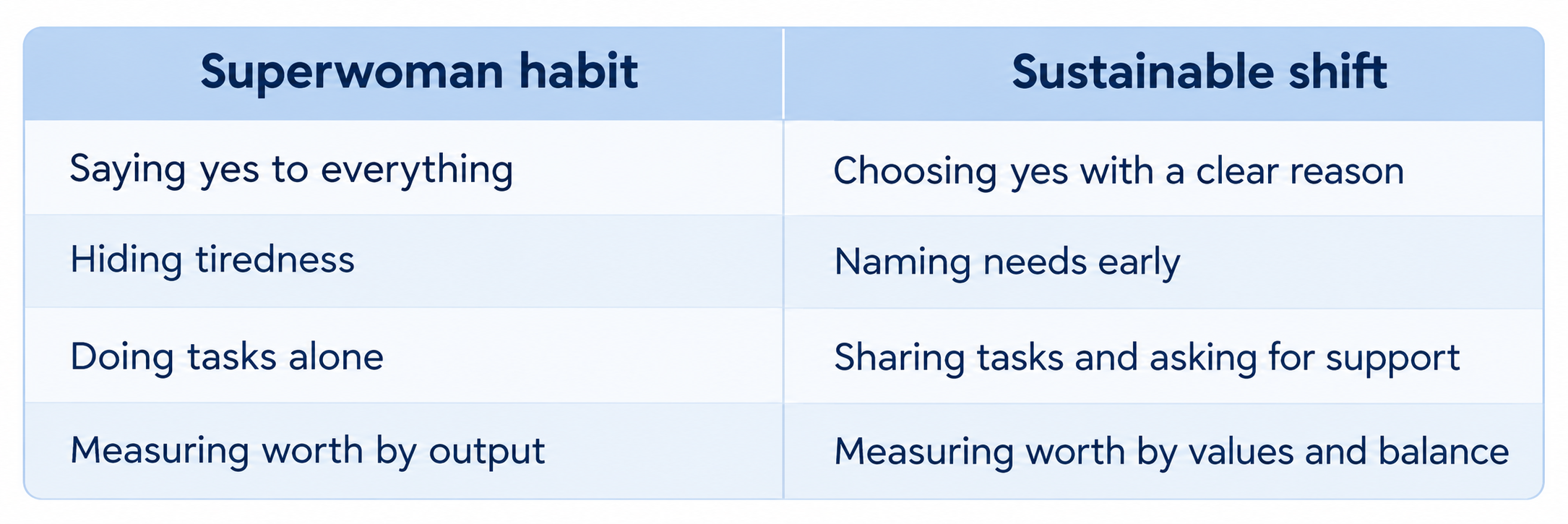
Each shift sounds simple. Each one takes practice, and coaching gives you accountability while you practice.
What Can You Change This Week?
Small moves beat grand resolutions. Try this checklist over the next seven days.
• Write down every task you did yesterday, including the invisible ones
• Circle three tasks that someone else can share
• Say one clear no without a long explanation
• Schedule one pause and protect it like a meeting
• Ask one person for one specific favour
How do I stop feeling like I have to do everything? Start by making the work visible, because nobody can share what they cannot see. Then share it, one task at a time. Expect some pushback. Habits resist change, especially comfortable ones. Keep going anyway. Progress rarely looks dramatic. It looks like a quiet Sunday afternoon that belongs to you.
In a Nutshell
Women remain expected to be superhuman because the system still depends on unpaid and invisible work. Official 2024 time-use data shows that far more women than men do unpaid domestic work, and that women who do it spend far longer on it. US workplace data shows higher burnout among women leaders and among women with children. A 2026 review of studies on working women in India reports that even economically independent women often feel overburdened and undervalued.
The cost appears as invisible exhaustion, guilt, and the belief that asking for help means failing. The solution is not to push yourself harder. True strength lies in knowing when to pause, set priorities, and ask for support. It means sharing the mental load, setting healthy boundaries, and speaking to yourself with compassion.
A personal growth coach for women can guide you through this transition and help you develop lasting confidence. You do not need a cape. You need rest, support, and a life that fits you. Take that seriously, and everything else gets easier.
Feeling Like Putting the Cape Down? Start Your Journey with Soul Sakhi
Soul Sakhi exists for women who are tired of performing strength and ready to build the real thing. Sangita, a communication enhancer and life coach with over 17 years in multinational workplaces, knows this pressure personally. She faced emotional burnout after motherhood and corporate demands, then chose self-rediscovery over stagnation. As a trusted personal growth coach for women, she helps you reconnect with your power, identity, and purpose.
Sessions are one on one, practical, and free from judgement. You can work on confidence and self-worth, limiting beliefs, conscious communication, emotional healing, and life direction. The approach blends heart centred guidance with simple tools that fit a busy life, whether you work outside the home or not.
This path suits you if you feel stuck, if midlife stagnation or burnout has crept in, or if you struggle with confidence or communication. Begin with a conversation. Book a discovery call at https://soulsakhi.co.in, send a WhatsApp message to 9972467890, or write to info@soulsakhi.co.in.
Your next chapter isn’t about putting in more effort. It requires better support, and that starts today!
Frequently Asked Questions
1. What does a personal growth coach for women do?
She guides you through goal setting, confidence building, and communication. She helps you spot limiting beliefs, set priorities, and build habits that support your wellbeing, career, and relationships without draining you.
2. Why do women feel pressure to do everything?
Long standing gender roles, unequal household duties, and social praise for self-sacrifice create that pressure. Official time use data shows women do far more unpaid domestic and caregiving work than men.
3. Does seeking help indicate weakness?
No. Asking for help shows self-awareness and good judgement. Strong people share the load, set boundaries, and use support so they can perform well without burning out.
4. How can I reduce my mental load at home?
List all household tasks, including invisible planning, then divide them clearly. Share ownership of whole tasks, not just single steps, and drop low value chores.
5. Should I choose coaching or counselling?
Choose coaching when you want direction, confidence, and practical tools for goals. Choose counselling or medical care when you face persistent low mood, anxiety, or health concerns.